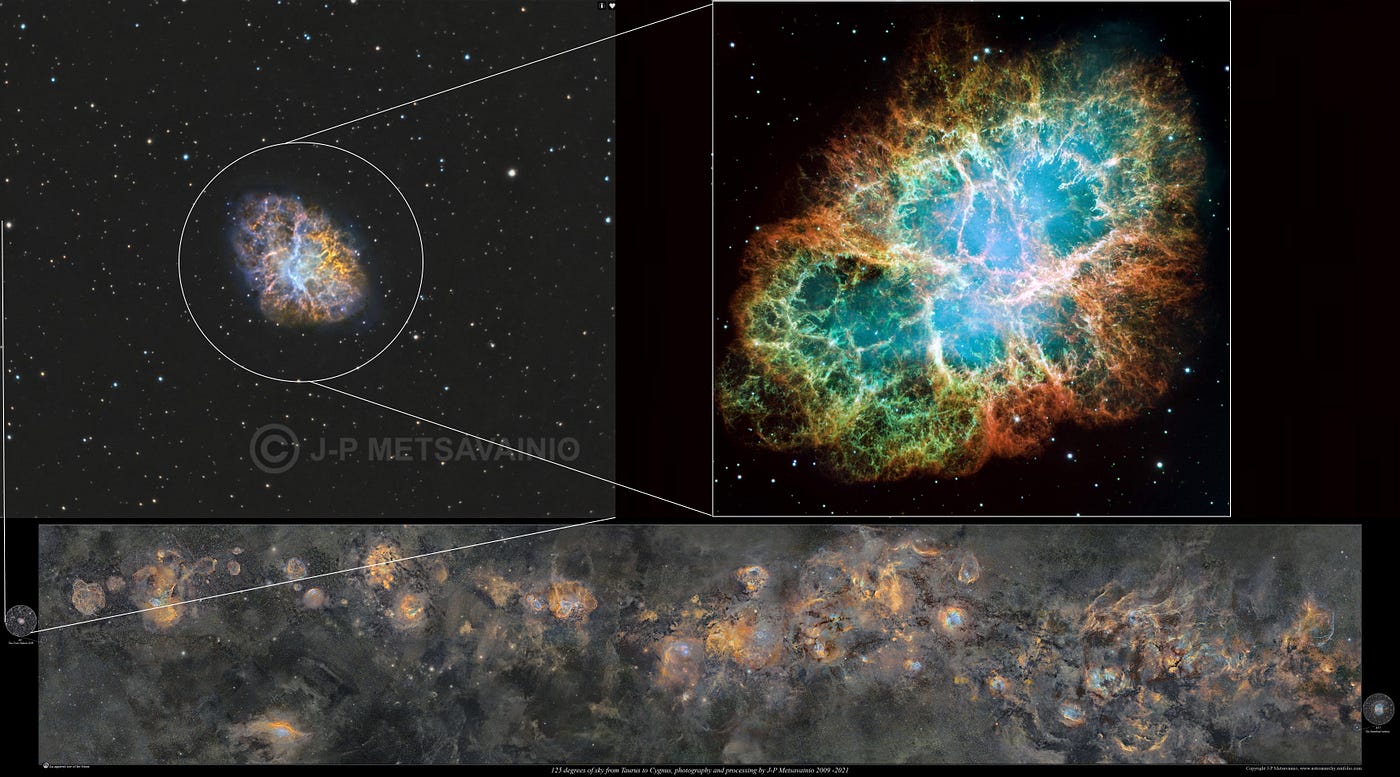
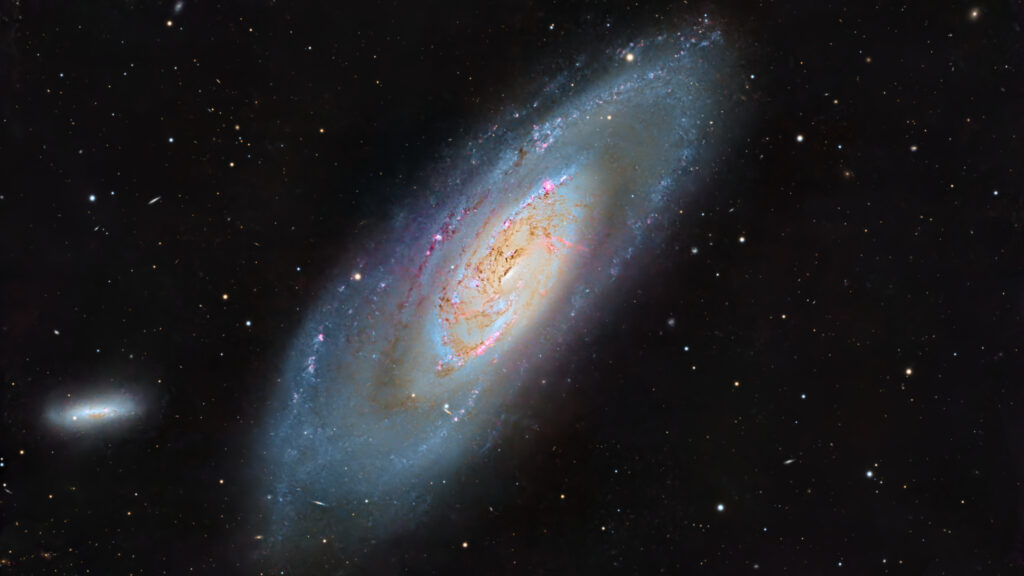
There is something magical about looking up at the night sky and realizing that the faint smudge visible above the horizon is an entire galaxy containing more than a trillion stars. For centuries, observing the cosmos required little more than curiosity and a telescope. Today, however, amateur astronomers are doing something extraordinary—they are photographing the deep Universe from their own backyards.
Modern astrophotography has entered a golden age. Thanks to advances in digital cameras, precision tracking mounts, and image-processing software, enthusiasts around the world are producing breathtaking images of galaxies, nebulae, and star clusters that would have been impossible to capture outside professional observatories just a few decades ago.
While no backyard telescope can compete with the Hubble or James Webb Space Telescopes, amateur astrophotographers are increasingly creating deep-space images of remarkable scientific and artistic quality. Some have even contributed observations used by professional astronomers and earned recognition from major astronomy organizations.
The modern astrophotographer is part scientist, part engineer, and part artist—with patience perhaps being their most valuable piece of equipment.
What Is Deep-Space Astrophotography?
Deep-space astrophotography is the practice of photographing celestial objects that lie beyond our Solar System. Unlike planetary imaging, which focuses on relatively bright targets such as Jupiter or Saturn, deep-space photography captures faint objects located thousands, millions, or even millions of light-years away.
Popular targets include:
- The Andromeda Galaxy
- The Orion Nebula
- The Pleiades star cluster
- The North America Nebula
- The Rosette Nebula
- Distant galaxies and globular clusters
Many of these objects are technically visible through small telescopes, but their true beauty only emerges when long-exposure photography reveals details invisible to the human eye.
Ironically, cameras can often “see” more than we can.
Why Cameras See More Than Human Eyes
The human eye is remarkable, but it has limitations. Our visual system processes light in real time and struggles to accumulate photons from extremely faint sources.
Digital cameras work differently.
By keeping their shutters open for extended periods, cameras collect light over time. A single exposure may last:
- 30 seconds
- 2 minutes
- 5 minutes
- 10 minutes or longer
When dozens or even hundreds of these exposures are combined, the result is an image that contains far more detail than any human observer could perceive through an eyepiece.
This process allows amateur astronomers to capture:
- Faint hydrogen clouds
- Galactic dust lanes
- Star-forming regions
- Structures millions of light-years away
The Universe is often far brighter than it appears to our eyes—it simply requires patience to reveal itself.
The Essential Equipment
One of the biggest misconceptions about astrophotography is that it requires extremely expensive equipment.
While professional setups can cost tens of thousands of dollars, beginners can start surprisingly small.
Camera
Common options include:
- DSLR cameras
- Mirrorless cameras
- Dedicated astronomy cameras
Modern consumer cameras are highly sensitive and capable of producing stunning results.
Telescope or Lens
Many beginners start with:
- Wide-angle camera lenses
- Small refractor telescopes
- Portable astrophotography telescopes
A high-quality small telescope often outperforms larger instruments that are difficult to transport and calibrate.
Tracking Mount
Arguably the most important piece of equipment is the equatorial tracking mount.
The Earth rotates at approximately 15 degrees per hour. Without tracking, stars quickly appear as streaks during long exposures.
Tracking mounts compensate for Earth’s rotation by moving the camera or telescope at precisely the correct speed.
This allows photographers to collect light for minutes or even hours while maintaining perfectly sharp stars.
Accessories
Useful accessories include:
- Intervalometers
- Guide cameras
- Dew heaters
- Filters
- Portable power supplies
- Light pollution filters
Fortunately, astrophotography equipment is highly modular, allowing enthusiasts to upgrade gradually over time.
Why Exposure Time Matters More Than Telescope Size
Beginners often assume that larger telescopes automatically produce better images.
In reality, total exposure time is usually far more important.
Consider photographing the Andromeda Galaxy.
A single 30-second exposure may reveal only a faint blur.
However:
- 100 exposures of 30 seconds equal 50 minutes of data.
- 240 exposures equal two hours.
- 600 exposures equal five hours.
The more photons collected, the more detail emerges.
This technique is known as integration time—the total amount of light gathered during an imaging session.
Many award-winning astrophotographs contain:
- 5 hours of exposure
- 15 hours of exposure
- 30 hours of exposure
- More than 100 hours of combined data
Astrophotography is less about taking a picture and more about collecting light.
Capturing the Andromeda Galaxy from Your Backyard
The Andromeda Galaxy is one of the most popular beginner targets in deep-space astrophotography.
Located approximately 2.5 million light-years away, it is the closest large galaxy to the Milky Way and can even be seen with the naked eye under dark skies.
What You Need
For a beginner setup:
- DSLR or mirrorless camera
- 135mm or 200mm lens
- Star tracker mount
- Tripod
- Dark sky location
Shooting Parameters
Typical settings might include:
- Exposure time: 60–120 seconds
- ISO: 800–1600
- Multiple exposures: 50–200 frames
The final image is not produced from a single photograph but from a collection of carefully captured data.
Many astrophotographers spend entire nights gathering the necessary exposures.
The Secret Technique: Image Stacking
If there is one technique that defines modern astrophotography, it is image stacking.
Stacking involves combining numerous individual photographs to create a single image with:
- Reduced noise
- Greater detail
- Improved color
- Increased dynamic range
Software aligns every frame with incredible precision before averaging the collected data.
Stacking offers two major advantages:
- Random noise decreases significantly.
- Weak astronomical signals become more visible.
This technique enables amateur astronomers to capture details that would otherwise remain hidden.
In many ways, stacking performs the same fundamental task that professional astronomical observatories have relied upon for decades.
Calibration Frames: The Hidden Science
Astrophotographers do more than simply photograph stars.
They also collect calibration data.
These include:
Dark Frames
Used to remove sensor noise and thermal artifacts.
Flat Frames
Correct uneven illumination and dust particles on optical components.
Bias Frames
Measure the camera’s electronic readout characteristics.
Together, these calibration frames improve image quality dramatically.
Professional observatories employ similar calibration procedures when processing scientific observations.
The distinction between amateur and professional astronomy has never been smaller than it is today.
Image Processing: Where Science Meets Art
Raw astrophotography images are often disappointing at first glance.
A newly captured galaxy may appear:
- Gray
- Dim
- Low contrast
- Nearly invisible
The transformation happens during processing.
Popular astrophotography software performs tasks such as:
- Stacking
- Color calibration
- Noise reduction
- Contrast enhancement
- Star reduction
- Dynamic range adjustments
Processing is not about inventing details—it is about revealing information already present within the data.
The final image reflects both technical skill and artistic judgment.
This is why two astrophotographers working with identical datasets can produce dramatically different interpretations of the same object.
Can Amateur Images Rival NASA?
The answer depends on what we mean by “rival.”
No amateur telescope can outperform a multi-billion-dollar space observatory operating above Earth’s atmosphere. NASA’s telescopes observe wavelengths inaccessible from the ground and achieve extraordinary scientific precision.
However, amateur astronomers possess unique advantages.
Modern astrophotographers can:
- Spend dozens of hours imaging a single target
- Experiment freely with equipment and techniques
- Capture wide-field perspectives unavailable to space telescopes
- Produce aesthetically stunning images
Many amateur photographs regularly win international astronomy competitions and are featured by scientific institutions.
Some of the most spectacular images of nebulae published each year originate not from government agencies but from backyard observatories.
The democratization of astronomy has transformed enthusiasts into contributors to the global scientific community.
Light Pollution: The Biggest Challenge
One of the greatest obstacles facing modern astrophotographers is light pollution.
Artificial lighting significantly reduces the visibility of faint celestial objects.
Common strategies for overcoming light pollution include:
- Traveling to dark sky locations
- Using narrowband filters
- Imaging during moonless nights
- Employing advanced processing techniques
Interestingly, narrowband imaging has become particularly popular among urban astrophotographers because it isolates specific wavelengths emitted by nebulae while suppressing artificial light sources.
Even city dwellers can capture extraordinary images of the cosmos.
Patience Is the Most Important Tool
Astrophotography rewards persistence more than expensive equipment.
A successful image may require:
- Careful planning
- Weather forecasts
- Precise polar alignment
- Hours of exposure time
- Extensive processing
Many astrophotographers spend multiple nights collecting data for a single image.
The process teaches valuable lessons in:
- Scientific observation
- Photography
- Physics
- Problem solving
- Patience and perseverance
Every finished image represents a conversation between the photographer and the Universe—one measured in photons that have traveled across unimaginable distances before reaching a camera sensor.
Conclusion
Deep-space astrophotography has transformed the way we engage with the cosmos. What once required access to professional observatories can now be accomplished by passionate enthusiasts equipped with consumer technology and a willingness to learn. Through long exposures, image stacking, and careful processing, amateur astronomers are revealing galaxies, nebulae, and stellar nurseries with breathtaking clarity.
Photographing the Universe is about far more than producing beautiful images. It is an invitation to participate in one of humanity’s oldest traditions—looking upward and asking questions about our place among the stars.
The next time you admire a stunning image of the Andromeda Galaxy online, remember that it may not have been captured by a space agency or a mountain-top observatory. It might have been taken by someone standing quietly in their backyard, waiting patiently as ancient starlight arrives, one photon at a time.
FAQ
Can beginners do astrophotography?
Yes. Many beginners start with a DSLR camera, a tripod, and a simple star tracker before gradually upgrading their equipment.
What is the easiest galaxy to photograph?
The Andromeda Galaxy is considered one of the best beginner targets because it is bright, large, and relatively easy to locate.
Why do astrophotographers take hundreds of photos?
Multiple exposures are stacked together to reduce noise and reveal faint details invisible in a single image.
Is expensive equipment necessary?
Not necessarily. Skill, exposure time, and proper image processing are often more important than owning the most expensive telescope.
Can amateur astronomers contribute to science?
Absolutely. Amateur astronomers regularly participate in observational campaigns, discover transient astronomical events, and produce valuable astronomical imagery used in education and public outreach.