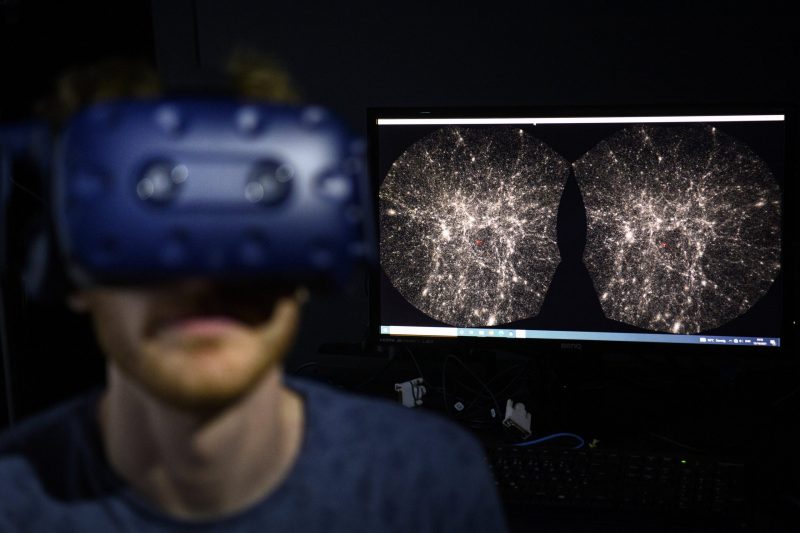
In 1995, discovering the wonders of the Universe online meant visiting a simple webpage with a single astronomical image and a short scientific explanation. At the time, the Internet was still in its infancy, and digital science communication was little more than an experiment. Few could have imagined that, three decades later, people would be able to explore distant galaxies in virtual reality, manipulate three-dimensional models of nebulae, or watch artificial intelligence transform raw telescope data into stunning visualizations of the cosmos.
Astronomy has always been a profoundly visual science. Throughout history, every technological breakthrough—from Galileo’s telescope to the James Webb Space Telescope—has expanded humanity’s ability to see and understand the Universe. Today, we are entering yet another transformative era, one in which scientific discoveries are becoming increasingly immersive, interactive, and accessible to audiences around the world.
Yet despite these extraordinary technological advances, one fundamental truth remains unchanged: curiosity is still the driving force behind scientific discovery. The tools may evolve, but humanity’s fascination with the night sky continues to connect generations of explorers, educators, and dreamers.
The future of astronomy outreach will not replace traditional science communication—it will build upon it.
From Static Images to Interactive Experiences
For much of modern astronomy’s history, scientific communication relied on photographs, illustrations, and written explanations. Space images inspired millions of people despite being static representations of distant objects.
Today, scientific visualization has evolved dramatically.
Modern audiences can interact with astronomical data through:
- Three-dimensional models of galaxies.
- Interactive star maps.
- Immersive planetarium experiences.
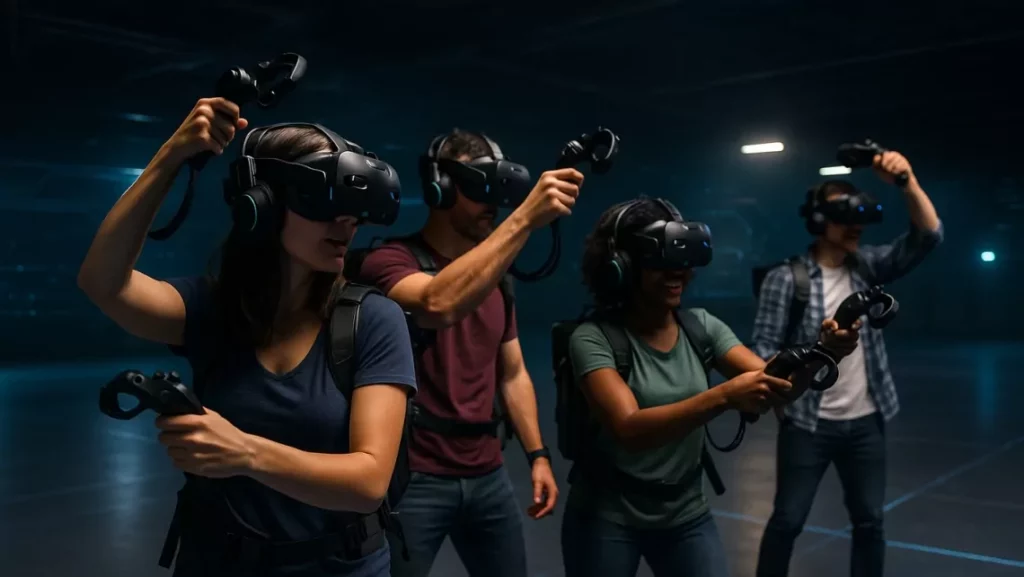
- Virtual reality simulations.
- Augmented reality applications.
- Artificial intelligence-powered visualizations.
Rather than simply observing scientific discoveries, people are increasingly able to explore them.
Students can now fly through a simulated stellar nursery, examine the surface of Mars in high resolution, or experience a journey across the observable Universe—all from their homes or classrooms.
Science communication is becoming participatory rather than purely observational.
Virtual Reality: Walking Among the Stars
Virtual reality (VR) is revolutionizing the way people engage with astronomical discoveries.
Traditional images provide only one perspective of celestial objects. VR environments allow users to experience space in entirely new ways by introducing:
- Scale.
- Depth.
- Motion.
- Spatial relationships.
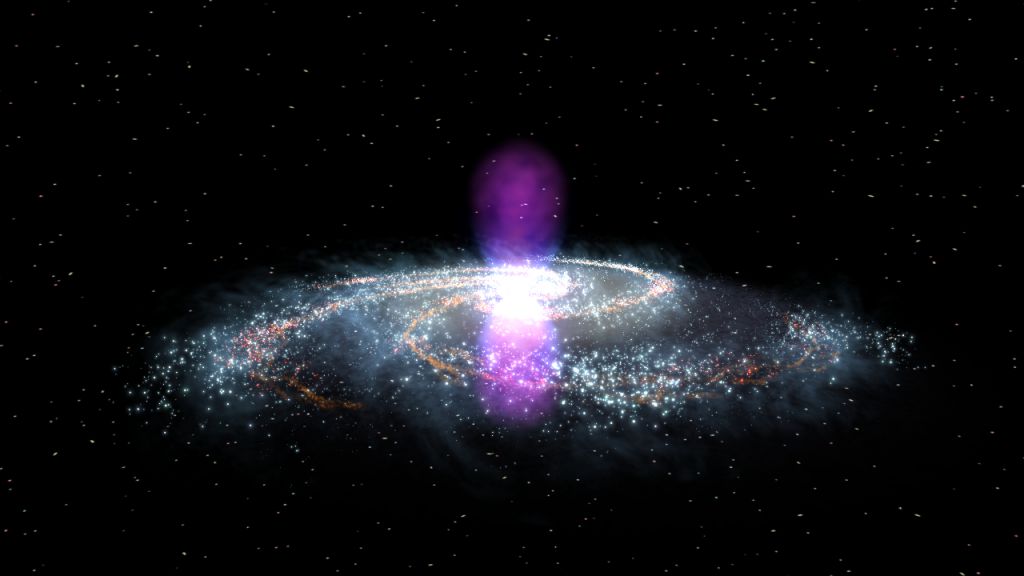
Imagine standing inside a glowing nebula and watching stellar winds sculpt enormous clouds of gas and dust around you. Or traveling through a spiral galaxy while observing billions of stars arranged in breathtaking cosmic structures.
Virtual reality experiences are particularly valuable for illustrating concepts that are difficult to communicate through two-dimensional images, such as:
- The large-scale structure of the Universe.
- Galactic evolution.
- Planetary orbits.
- Stellar formation processes.
- Cosmic distances.
By transforming scientific datasets into immersive environments, VR allows learners to experience astronomy rather than simply read about it.
Bringing the Universe into the Classroom
Emerging technologies are reshaping STEM education in remarkable ways.
Interactive astronomy tools now enable educators to:
- Explore the Solar System in real time.
- Visualize exoplanetary systems.
- Compare astronomical observations across multiple wavelengths.
- Investigate cosmic phenomena through simulations.
- Conduct virtual space missions.
Modern students increasingly expect educational experiences to be interactive and visually engaging. Astronomy is particularly well suited to this educational shift because astronomical data naturally lends itself to visualization.
Imagine teaching the phases of the Moon using a traditional textbook diagram. Now compare that experience with allowing students to manipulate a three-dimensional Earth-Moon system in augmented reality.
The difference is transformative.
Interactive scientific experiences improve engagement while helping students develop a deeper conceptual understanding of complex topics.
Artificial Intelligence and Scientific Visualization
Artificial intelligence is rapidly becoming one of the most influential technologies in modern astronomy.
AI systems are already helping scientists:
- Process enormous datasets.
- Detect previously unidentified celestial objects.
- Classify galaxies.
- Enhance astronomical imagery.
- Model cosmic phenomena.
Future science communication will likely benefit from AI-powered tools capable of generating personalized educational experiences.
Imagine asking an intelligent astronomy assistant:
Show me how stars form inside the Eagle Nebula.
Within seconds, an AI system could generate an interactive visualization tailored to your age, educational background, and scientific interests.
Similarly, future astronomy platforms may allow users to:
- Explore real telescope observations conversationally.
- Receive simplified scientific explanations.
- Compare historical and modern observations.
- Simulate cosmic events in real time.
Artificial intelligence has the potential to democratize access to scientific knowledge on an unprecedented scale.
The Rise of Citizen Astronomy
Technology is also transforming the relationship between professional scientists and the public.
Citizen science projects have demonstrated that non-professionals can make meaningful contributions to astronomical research.
Modern volunteers help scientists:
- Classify galaxies.
- Identify exoplanet candidates.
- Monitor transient astronomical events.
- Analyze observational data.
- Capture scientifically valuable astrophotography.
Future science communication platforms may blur the distinction between education and participation even further.
Imagine visiting a digital observatory where users can:
- Explore telescope data.
- Contribute to scientific discoveries.
- Participate in global observing campaigns.
- Collaborate with researchers worldwide.
Science communication is gradually evolving from simply sharing discoveries to actively involving people in the scientific process itself.
Why Visualization Matters More Than Ever
Astronomy produces some of the largest and most complex datasets in all of science.
Modern observatories generate extraordinary amounts of information that cannot be understood without sophisticated visualization techniques.
Scientific visualization helps researchers and the public:
- Understand invisible wavelengths of light.
- Interpret multidimensional datasets.
- Explore large-scale cosmic structures.
- Communicate discoveries effectively.
As astronomical instruments become increasingly powerful, visualization will play an even greater role in making scientific discoveries accessible.
The future of astronomy communication is not merely about displaying images—it is about translating complex science into meaningful human experiences.
Why Traditional Projects Still Matter
With so many emerging technologies, it may be tempting to assume that traditional science communication projects will eventually become obsolete.
History suggests otherwise.
Some of the most influential astronomy outreach initiatives have succeeded precisely because of their simplicity. A single image accompanied by a thoughtful scientific explanation remains one of the most powerful educational formats ever created.
Traditional projects continue to offer something technology alone cannot provide:
- Careful curation.
- Scientific context.
- Editorial expertise.
- Historical continuity.
- Daily moments of wonder.
The value of astronomy outreach has never depended solely on technological sophistication. Its greatest strength lies in its ability to inspire curiosity.
No virtual reality headset can replace the emotional experience of encountering a remarkable scientific discovery for the first time.
Building the Next Generation of Cosmic Explorers
The future of science communication will likely combine the strengths of both traditional and emerging approaches.
Tomorrow’s astronomy enthusiasts may:
- Read daily astronomy articles online.
- Explore nebulae in virtual reality.
- Participate in citizen science projects.
- Interact with AI-powered educational tools.
- Observe the night sky using augmented reality applications.
- Analyze real telescope data from classrooms around the world.
These technologies will not compete with one another—they will complement one another.
The ultimate goal remains unchanged: helping people understand and appreciate the Universe.
Humanity’s Endless Conversation with the Cosmos
Throughout history, humanity has used every available tool to explore the heavens.
We have progressed from:
- Naked-eye observations.
- Hand-drawn star charts.
- Optical telescopes.
- Space observatories.
- Digital archives.
- Interactive scientific platforms.
- Immersive virtual experiences.
Each technological revolution has expanded our cosmic perspective while preserving the timeless human desire to ask questions about our origins and our place in the Universe.
Science communication is, at its heart, a conversation between humanity and the cosmos—a conversation that continues to evolve with every new generation of explorers.
Conclusion
The future of astronomy outreach is brighter and more exciting than ever before. Virtual reality, artificial intelligence, interactive scientific visualization, and citizen science initiatives are transforming the ways we learn about and experience the Universe. These innovations promise to make astronomy more accessible, engaging, and immersive for people of all ages and backgrounds.
Yet the enduring success of traditional science communication projects reminds us that technology is only a tool. What truly inspires scientific discovery is the sense of wonder that arises when we encounter something extraordinary about the cosmos.
Whether through a simple webpage displaying a photograph of a distant galaxy or a virtual journey through the glowing heart of a nebula, the mission remains the same: to help humanity look upward with curiosity, understanding, and awe.
The future of astronomy communication is not simply about seeing more of the Universe. It is about helping more people feel connected to it.
FAQ
How is virtual reality being used in astronomy education?
Virtual reality allows students and the public to explore immersive simulations of astronomical objects and cosmic phenomena in three dimensions.
Can artificial intelligence improve science communication?
Yes. AI can personalize educational experiences, simplify complex scientific concepts, and help visualize astronomical data more effectively.
What is citizen astronomy?
Citizen astronomy involves members of the public contributing to scientific research through data analysis, observations, and collaborative projects.
Will traditional astronomy websites become obsolete?
No. Carefully curated scientific content remains highly valuable and complements emerging technologies rather than competing with them.
What is the future of astronomy outreach?
The future will likely combine traditional science communication with immersive technologies such as virtual reality, artificial intelligence, and interactive scientific visualization to make the Universe more accessible than ever before.