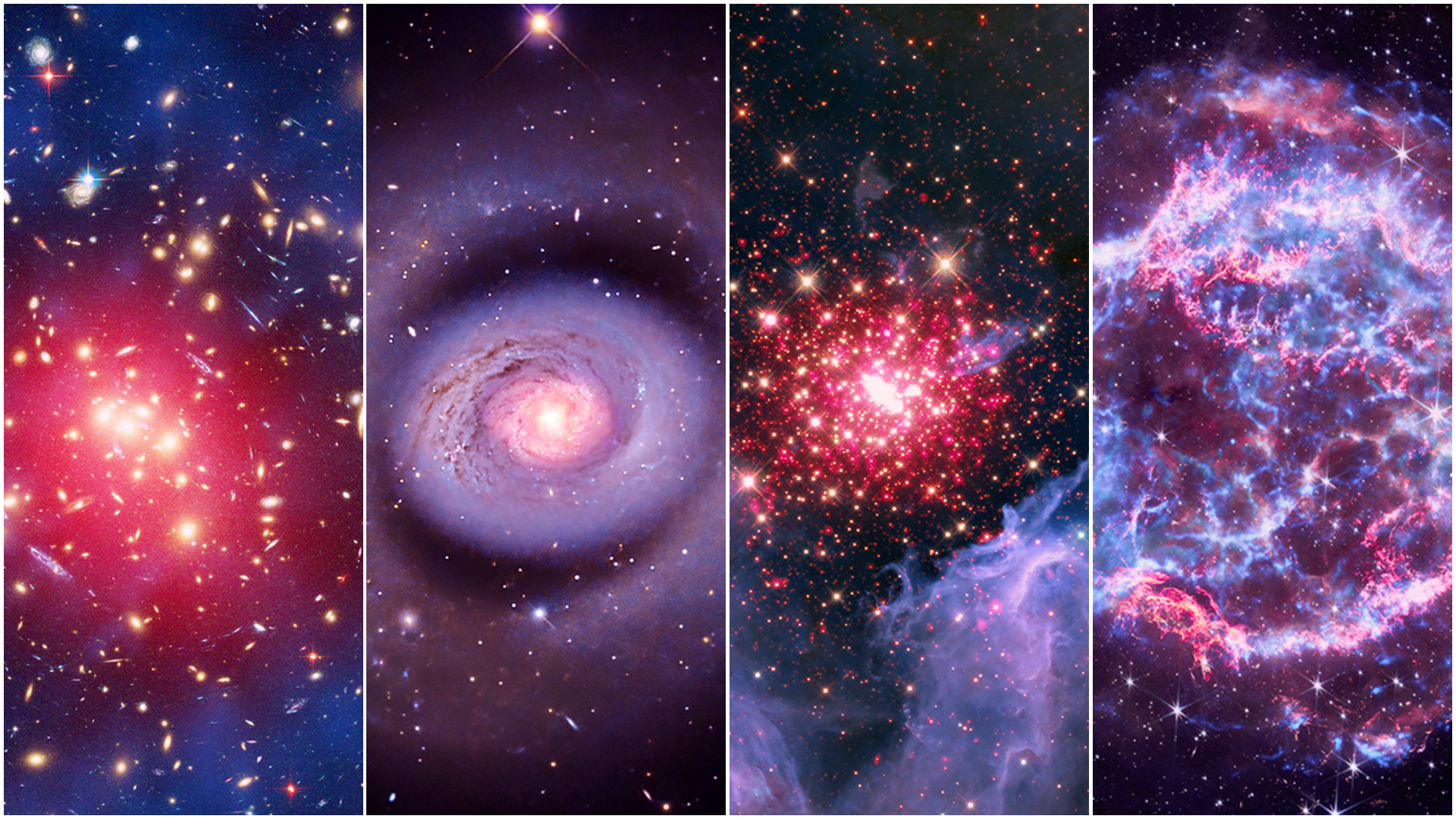
Long before social media feeds were filled with stunning images from space and before the James Webb Space Telescope became a household name, there was a simple webpage that invited people around the world to spend a few minutes each day looking up at the Universe.
Since June 16, 1995, NASA’s Astronomy Picture of the Day—better known as APOD—has published a new astronomical image every single day. What began as an experimental educational project created by two astronomers has grown into one of the longest-running and most beloved science websites on the Internet. Millions of readers have discovered galaxies, eclipses, nebulae, meteor showers, and the hidden beauty of our cosmos through its carefully curated collection of images and explanations.
APOD is more than an archive of spectacular photographs. It is a living history of humanity’s exploration of the Universe—a daily reminder that science can inspire wonder just as powerfully as art.
Thirty years later, the project continues to prove that one extraordinary image and a few hundred thoughtfully written words can change the way we see the cosmos.
The Birth of APOD in 1995
The Internet of 1995 looked very different from the modern web. Websites were simple, connections were slow, and digital science communication was still in its infancy.
It was during this period that astronomers Robert Nemiroff and Jerry Bonnell launched a remarkably straightforward idea: publish one astronomy image every day accompanied by a short explanation that anyone could understand.
Their goals were ambitious yet elegant:
- Make astronomy accessible to everyone.
- Share the beauty of the Universe with the public.
- Explain complex scientific concepts in plain language.
- Create a permanent educational archive.
- Encourage curiosity about space science.
The first Astronomy Picture of the Day appeared on June 16, 1995. Few could have predicted that this modest webpage would become one of NASA’s most enduring public outreach projects.
What made APOD unique was its philosophy. It treated astronomical imagery not merely as scientific data but as a universal language capable of inspiring people regardless of age, profession, or scientific background.
A Simple Idea That Changed Science Communication
The formula behind APOD has remained remarkably consistent for three decades:
- One image or video.
- One explanation.
- One new publication every day.
This simplicity is arguably the project’s greatest strength.
Every APOD entry typically includes:
- An astronomical image or animation.
- A concise scientific explanation.
- Historical or observational context.
- Links to related scientific resources.
- Archived entries for future reference.
By limiting itself to a single featured image each day, APOD encourages readers to slow down and fully appreciate both the scientific and artistic significance of what they are observing.
In an era dominated by endless scrolling and rapidly consumed content, APOD remains intentionally thoughtful and focused.
More Than Beautiful Pictures
One of the reasons APOD has remained relevant for thirty years is that it goes beyond showcasing beautiful photographs.
Its archive includes:
- Professional telescope observations.
- Amateur astrophotography.
- Planetary images.
- Space mission photography.
- Astronomical simulations.
- Scientific visualizations.
- Historical astronomical discoveries.
- Educational animations and videos.
An APOD image might feature:
- A solar eclipse photographed from Antarctica.
- A galaxy located millions of light-years away.
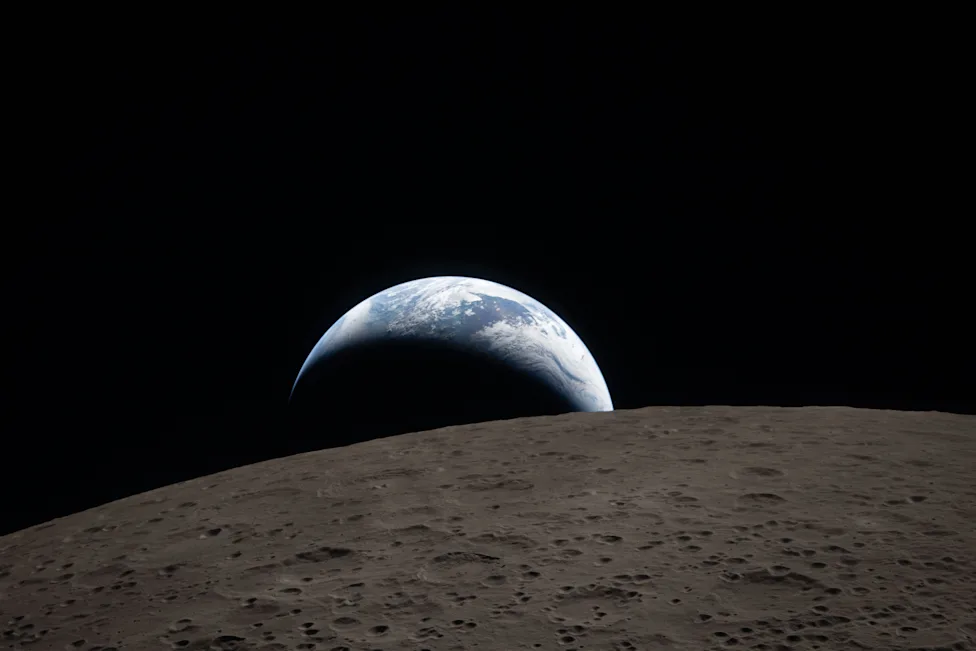
- The International Space Station crossing the Moon.
- A meteor streaking across the night sky.
- The first images from a newly launched space telescope.
The project celebrates astronomy in all its forms, making it one of the most diverse scientific image archives available online.
Building the Internet’s Longest Daily Astronomy Archive
Maintaining a daily publication schedule for thirty years is a remarkable achievement.
Consider the numbers involved.
By its thirtieth anniversary, APOD has accumulated:
- More than 10,000 daily publications.
- Tens of thousands of astronomical images.
- Contributions from scientists and photographers worldwide.
- Readers from virtually every country.
Unlike many digital projects that disappear after a few years, APOD has become a historical record of both astronomical discoveries and the evolution of science communication itself.
Its archive documents major milestones such as:
- The launch of the Hubble Space Telescope.
- The discoveries of Mars rovers.
- Total solar eclipses.
- Exoplanet discoveries.
- The first image of a black hole.
- The arrival of the James Webb Space Telescope.
- Advances in amateur astrophotography.
Browsing the APOD archive is, in many ways, browsing the recent history of modern astronomy.
The Minds Behind the Project
Robert Nemiroff and Jerry Bonnell understood something fundamental about science communication: people are naturally curious about the Universe.
Rather than overwhelming readers with technical jargon, they developed an editorial approach based on accessibility and storytelling.
Each APOD explanation is written to answer questions such as:
- What are we looking at?
- Why is it scientifically important?
- How was the image captured?
- What does it teach us about the Universe?
- Why should we care?
Their writing style avoids unnecessary complexity while maintaining scientific accuracy—a balance that many educational projects struggle to achieve.
Over the decades, their consistent editorial voice has become one of APOD’s defining characteristics.
Astronomy for Everyone
Perhaps APOD’s greatest achievement is its inclusivity.
Its audience includes:
- Professional astronomers.
- Teachers and students.
- Amateur astrophotographers.
- Space enthusiasts.
- Artists and designers.
- Parents and children.
- Casual readers with no scientific background.
Astronomy possesses a unique ability to unite people through shared curiosity. APOD embraces this universality by making every publication understandable to a broad audience.
Readers do not need advanced degrees in astrophysics to appreciate:
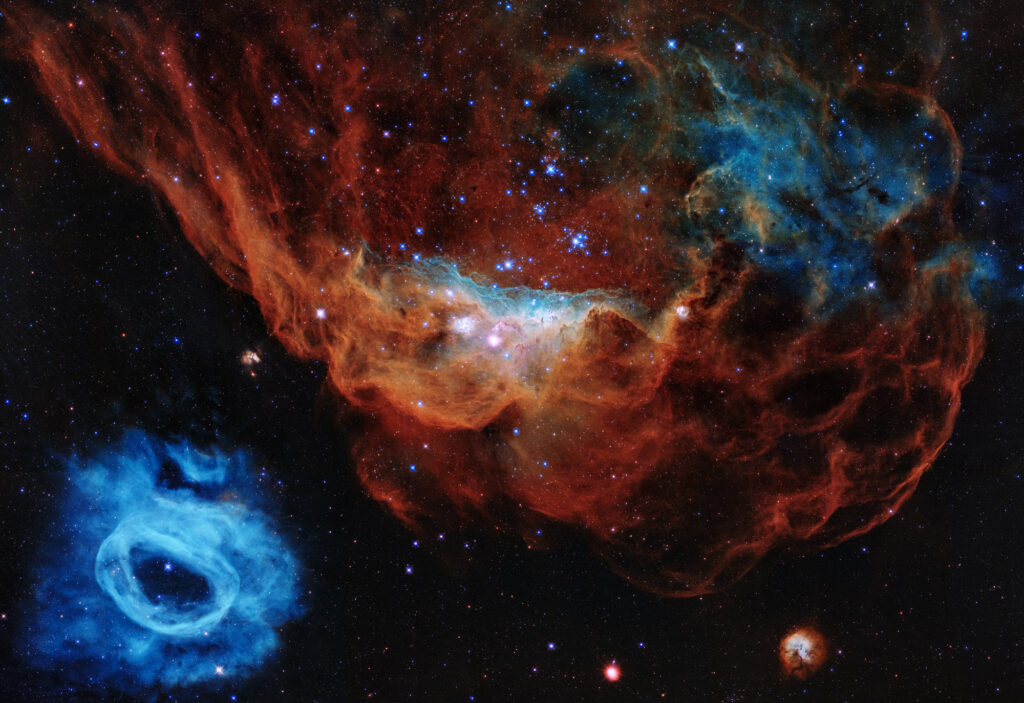
- The colors of a nebula.
- The shadow of a lunar eclipse.
- The spiral arms of a distant galaxy.
- The philosophical significance of our place in the cosmos.
Wonder is the project’s primary language.
The Rise of Amateur Contributions
One of APOD’s most celebrated traditions is its recognition of amateur astronomers.
Many featured images are captured by individuals working from:
- Backyard observatories.
- Dark sky locations.
- Remote mountain sites.
- Portable astrophotography setups.
Modern amateur astrophotography has become extraordinarily sophisticated. Some enthusiasts spend dozens of hours collecting and processing data to produce breathtaking images worthy of international recognition.
Being featured on APOD has become one of the highest honors in amateur astronomy.
For countless photographers around the world, appearing on the website represents years of dedication and passion for observing the night sky.
The project serves as a reminder that scientific discovery and appreciation are not limited to professional institutions.
Surviving Three Decades of Technological Change
The Internet has undergone dramatic transformations since 1995.
APOD has witnessed:
- Dial-up connections.
- The rise of search engines.
- Social media platforms.
- Smartphones and mobile browsing.
- High-resolution digital imaging.
- Artificial intelligence.
- Virtual and augmented reality technologies.
Yet the project’s fundamental design has changed very little.
Ironically, this simplicity may explain its longevity.
While digital trends constantly evolve, the human fascination with the night sky remains unchanged.
Every day offers a new opportunity to discover something extraordinary about the Universe.
APOD’s Educational Legacy
Educators frequently use APOD as a teaching tool across multiple disciplines.
Its daily publications provide opportunities to explore:
- Physics
- Astronomy
- Mathematics
- Photography
- Space exploration
- Scientific literacy
- Critical thinking
Teachers often use APOD images to introduce complex concepts such as:
- Light-years
- Black holes
- Stellar evolution
- Cosmology
- Planetary science
- Space missions
The project’s archive effectively functions as a free and continuously expanding astronomy textbook spanning three decades of scientific progress.
Why APOD Still Matters Today
In an age when astronomical images are shared instantly across countless digital platforms, one might ask whether APOD remains necessary.
The answer is unequivocally yes.
Modern audiences are exposed to an unprecedented volume of scientific content. Yet context is often missing.
APOD provides something increasingly valuable:
- Careful curation.
- Scientific explanations.
- Historical perspective.
- Educational depth.
- Daily opportunities for reflection and discovery.
Its success demonstrates that people continue to seek meaningful science communication rather than merely consuming visually impressive content.
Astronomy is not simply about collecting beautiful images—it is about understanding what those images reveal about the Universe and ourselves.
Looking Toward the Future
As astronomy enters a new era of technological advancement, APOD continues to evolve alongside it.
Future entries will undoubtedly include discoveries from:
- Next-generation space telescopes.
- Lunar exploration programs.
- Mars missions.
- Artificial intelligence-assisted astronomy.
- Immersive scientific visualizations.
- New astronomical observatories currently under construction.
The cosmos remains inexhaustible, and humanity’s ability to observe it continues to expand.
There will always be another galaxy to discover, another eclipse to photograph, and another cosmic mystery waiting to be explained.
Conclusion
For thirty years, Astronomy Picture of the Day has accomplished something remarkable. It has transformed a simple idea—a single astronomical image accompanied by a thoughtful explanation—into one of the world’s most enduring and influential science communication projects.
Its archive is more than a collection of photographs. It is a daily chronicle of humanity’s relationship with the Universe, documenting our discoveries, technological achievements, and enduring sense of wonder.
In a rapidly changing digital world, APOD reminds us that curiosity never goes out of style. Sometimes, all it takes to inspire millions of people is one image, one story, and one invitation to look up at the stars.
FAQ
What is Astronomy Picture of the Day (APOD)?
APOD is a NASA-supported educational project that publishes one astronomy-related image or video every day alongside an accessible scientific explanation.
When was APOD created?
The project was launched on June 16, 1995, by astronomers Robert Nemiroff and Jerry Bonnell.
How many APOD entries exist?
After thirty years of daily publications, the archive contains more than 10,000 astronomy images and explanations.
Can amateur astronomers be featured on APOD?
Yes. Amateur astrophotographers from around the world are regularly featured when their images meet the project’s scientific and artistic standards.
Why has APOD remained popular for so long?
Its combination of beautiful imagery, scientific accuracy, educational value, and daily consistency has made it one of the most respected astronomy outreach projects on the Internet.